
"Andes mountains"
1000 article(s) found

A brief introduction to the history and culture of the origin and development of Ecuadorian boutique coffee beans with balanced and refreshing taste
However, Thomas will never know that the island they landed on is the only island in the Galapagos Islands with plenty of fresh water. It is today's St. Cristobal Island (Saint Cristobal), a well-known South American brand, Ecuadorian Grade A coffee, with a large state-run seed value garden; 100% from the 1300-2000 m high natural vegetation zone, popular in Europe and the United States.

Los Andes Manor Kenya SL28 Coffee introduces Nate's four manors
El Salvador's unique Kenyan style-Los Andes Manor Los Andes Manor-Los Andes farm, not far from the city of Santa Ana (Santa Ana), if the weather is good, about 1 hour to arrive, in fact, Santa Anna City is in the foot of the Santa Ana volcanic area, such as the well-known legend Neto, he is proud of the four estates-Fantasy, Brumas, A

Winner of the 2012 extraordinary Cup | Santa Ana production area of El Salvador | full water washing SL28 of Andes Farm
Professional coffee knowledge exchange more coffee bean information please follow the coffee workshop (Wechat official account cafe_style) 2012 extraordinary Cup Champion | Santa Ana production area of El Salvador | full-washed SL28 flavor of Andes Farm? Ernesto Menedez (Ernesto Menndez) is a very famous coffee farmer in El Salvador. He owns several farms, including Mirage (

Colombian coffee brands recommend Colombian supermo grade coffee as the best selection.
Professional coffee knowledge exchange more coffee bean information please follow the coffee workshop (Wechat official account cafe_style) front street-Colombia supermo introduces Colombian coffee is divided into more than 200 grades, that is to say, the coffee region is very strong. The country's coffee-producing areas are located in the Andes, where the climate is mild and the air is humid. Colombia has three Kodiera mountains running north and south.

Fruit aroma of Ecuadorian Coffee Manor flavor and taste characteristics of boutique coffee beans
Ecuador is divided into the western coast, the central mountains, the eastern Amazon River basin and the four central regions of the Galapagos Islands, with diverse climatic conditions. The western coastal plain belongs to the tropical rain forest climate, with an average temperature of 23-25 ℃. The central Andes. The intermountain basin in this area belongs to the savanna climate, and the mountain belongs to the subtropical forest climate, with perennial snow above 4000 meters above sea level. Annual average decline

Introduction to the flavor and taste characteristics of coffee from Santa Cruz Manor, Ecuador, which tastes very balanced and refreshing.
After entering Ecuador from Colombia, the Andes is divided into the eastern and western Cordillera mountains, with a high plateau in the north and a low plateau in the south, with an average elevation of between 2500 meters and 3000 meters. The Andes run through the middle of the border. The ridges crisscross, dividing the plateau into more than ten intermountain basins. The most important are the Quito basin and the Cuenca basin in the south. There are many volcanoes and frequent earthquakes in the territory.

Coffee planting method Coffee Origin Colombian Coffee
The suitable climate of Colombian coffee provides a real natural pasture for coffee. Coffee trees in Colombia are mainly cultivated in the Andes, on steep slopes about 1300 meters above sea level, where the annual temperature is about 18 degrees Celsius, annual rainfall is 2000 to 3000 mm, latitude 1-11-15, longitude 72-78 the suitable climate of Colombia provides coffee.

Coffee flavor and taste characteristics of Hassanda Coffee Garden in Ecuador introduction of boutique coffee beans
Central mountain: after entering Ecuador from Colombia, the Andes is divided into the eastern and western Cordillera mountains, with a plateau high in the north and low in the south, averaging between 2500 and 3000 meters above sea level. The Andes run through the middle of the border. The ridges crisscross, dividing the plateau into more than ten intermountain basins. The most important are the Quito basin and the Cuenca basin in the south. There are many volcanoes in the territory.
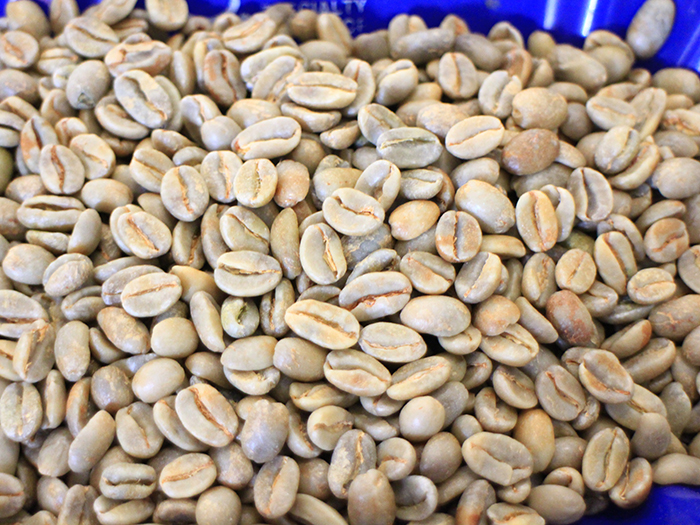
Colombia Santa Rita Coffee Green Beans Andes Micro-production washed high quality imported green beans
The history of coffee cultivation in Colombia can be traced back to the Spanish colonial era in the 16th century. There are also many sayings about the history of coffee in Colombia: First, it is said to have been transmitted from the Caribbean island of Haiti via El Salvador in Central America. Second, coffee beans were first introduced into Colombia in 1808 by a priest from the French Antilles via Venezuela. one of

Introduction to the unique flavor and taste characteristics of coffee from Chateau San Pedro, Ecuador
Central mountain: after entering Ecuador from Colombia, the Andes is divided into the eastern and western Cordillera mountains, with a plateau high in the north and low in the south, averaging between 2500 and 3000 meters above sea level. The Andes run through the middle of the border. The ridges crisscross, dividing the plateau into more than ten intermountain basins. The most important are the Quito basin and the Cuenca basin in the south. Volcanic crowds in the territory

A brief introduction to Hope Manor in the Andes, a coffee-producing region of Colombia
Coffee workers go up the mountain to pick coffee beans (also known as coffee cherries) by hand, so they can pick carefully and pick the most ripe and full fruits. The vast majority of Colombian coffee beans are water-washed and moderately roasted with a light, silky and sometimes sour taste, which is not as strong as Brazilian coffee and Italian Expresso and is known as green.

Introduction to the characteristics of coffee flavor and taste of Santa Cruz Manor in Ecuador
After entering Ecuador from Colombia, the Andes is divided into the eastern and western Cordillera mountains, with a high plateau in the north and a low plateau in the south, with an average elevation of between 2500 meters and 3000 meters. The Andes run through the middle of the border. The ridges crisscross, dividing the plateau into more than ten intermountain basins. The most important are the Quito basin and the Cuenca basin in the south. There are many volcanoes and earthquake frequency in the territory.

2017 WBC champion beans with the same style _ El Salvador SL28 coffee bean price _ El Salvador coffee flavor
Professional coffee knowledge exchange more coffee bean information please follow the coffee workshop (Wechat official account cafe_style) Salvadoran coffee bean Andes farm SL28 (2017 WBC champion beans with the same owner) this year's WBC World Coffee Masters champion Dale Harris competition beans, from the Salvadoran coffee farmer Menedez planted SL28, this bean hit

Introduction to the fragrant Ecuadorian Coffee Flavor and the Fine Coffee in the Manor area
Ecuador is divided into the western coast, the central mountains, the eastern Amazon River basin and the four central regions of the Galapagos Islands, with diverse climatic conditions. The western coastal plain belongs to the tropical rain forest climate, with an average temperature of 23-25 ℃. The central Andes. The intermountain basin in this area belongs to the savanna climate, and the mountain belongs to the subtropical forest climate, with perennial snow above 4000 meters above sea level. Annual average decline

Brief introduction of Colombian Huilan Coffee Variety Flavor description Taste treatment Grinding Calibration Variety
Introduction to Colombian Huilan Coffee Variety Flavor description method Grinding scale varieties Colombia spans the northern and southern hemispheres, the coffee producing areas of the country are mostly located between 2 and 8 degrees north latitude, and the coffee producing areas are concentrated in the areas of Sanchuan and Liangliang Rivers, that is, the part of the Andes (Cordillera Mountains) in Colombia, where Colombia's rivers almost originate from the Andes. Okay, coffee producing area.

Flavor and taste characteristics of coffee manor in Ecuador introduction to Santa Cruz Manor
Ecuador is divided into the western coast, the central mountains, the eastern Amazon River basin and the four central regions of the Galapagos Islands, with diverse climatic conditions. The western coastal plain belongs to the tropical rain forest climate, with an average temperature of 23-25 ℃. The central Andes. The intermountain basin in this area belongs to the savanna climate, and the mountain belongs to the subtropical forest climate, with perennial snow above 4000 meters above sea level. Annual average decline

Ecuadorian coffee flavor taste manor production area boutique coffee introduction to Santa Cruz Manor
West coast: including coastal plains and foothills, high in the east and low in the west, generally below 200 meters above sea level, with some hills and low mountains at an altitude of 600 to 700 meters. Belongs to the tropical rain forest climate, the southernmost end begins to transition to the savanna climate. The average annual precipitation decreases from more than 3000 mm to about 500mm from north to south. Central Mountains: the Andes enter Ecuador from Colombia

Micro-producing areas of Santa Rita Coffee beans in the Andes, Colombia
Santa Rita Manor is located in the Colombian province of Antioquia, located in a micro-producing area adjacent to the Andes. This high-quality coffee is made together by nine nearby farms. The nine farms still handle the coffee in the traditional way: picking coffee cherries by hand, then washing the coffee fruits with traditional water, and drying the treated coffee beans in the sun in the scaffolding.
Boutique coffee Columbia Santa Rita coffee raw beans micro-producing areas of the Andes
Santa Rita Manor is located in the Colombian province of Antioquia, located in a micro-producing area adjacent to the Andes. This high-quality coffee is made together by nine nearby farms. The nine farms still handle the coffee in the traditional way: picking coffee cherries by hand, then washing the coffee fruits with traditional water, and drying the treated coffee beans in the sun in the scaffolding.

Santa Rita Coffee Manor, Colombia. Fine coffee from micro-producing areas of the Andes.
Santa Rita Manor is located in the Colombian province of Antioquia, located in a micro-producing area adjacent to the Andes. This high-quality coffee is made together by nine nearby farms. The nine farms still handle the coffee in the traditional way: picking coffee cherries by hand, then washing the coffee fruits with traditional water, and drying the treated coffee beans in the sun in the scaffolding.